How to Keep One-on-Ones From Turning Into Status Meetings
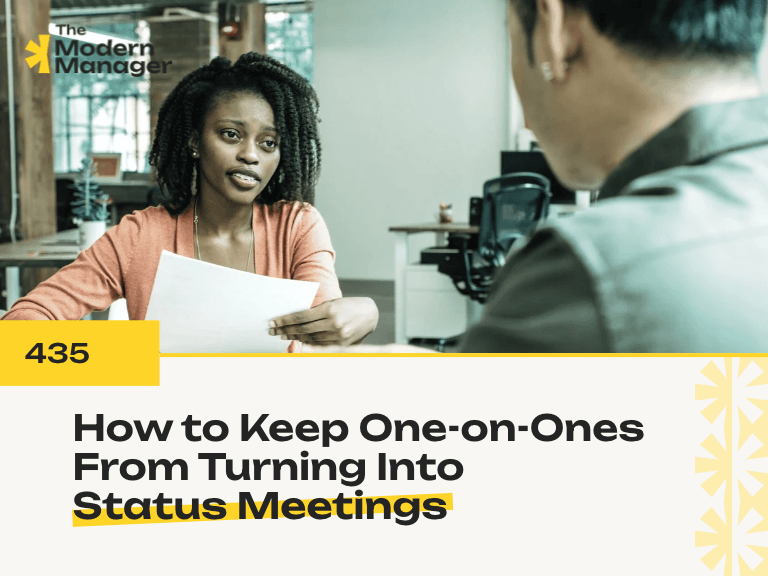
Listen to the full episode to learn how to run one-on-ones that aren't just status updates.
Listen to the full episode →Follow The Modern Manager on your favorite podcast platform so you won't miss an episode!
Think about your last one-on-one. How many minutes were about the work, and how many were about the person?
If it's mostly the work, you're not alone. One of the most common mistakes I see managers make is folding the check-in and the one-on-one into one meeting. When those two conversations share the same 30 minutes, the work wins every time, and you find out your people are struggling far too late.
What It Costs When Your One-on-One Is Really a Check-In
A status meeting dressed up as a one-on-one costs you three things:
First, your person gets stuck. No one is asking where they want to go or what they want to learn, so they keep doing the same work, maybe a little faster. People who feel stuck start looking for a role where they won't be, usually quietly and before you notice.
Second, you miss what they could become. When every conversation is about this week's deliverables, you never see the skill they've been building on the side or the problem they'd love to own. You also miss the small stuff, like a slow process or tension with a teammate, which is usually an easy fix when you hear about it early.
Third, you lose your best source of feedback on yourself. Your direct reports know better than anyone what you do that helps them and what gets in their way. A status meeting never gives them room to tell you.
Check-Ins Are About the Work
A check-in keeps the work moving. It covers status, blockers, decisions, and next steps. It runs 15 to 30 minutes, daily to weekly, and it doesn't even have to be a meeting. An async update or a stand-up works too.
To keep it from turning into a ramble, use a simple framework:
A quick human moment. Two minutes to say hello.
What's moved? What work has moved forward?
What's stuck? What's blocking progress?
What do you need from me? Actions, decisions, or input.
Bonus question: What else should I know about?
One-on-Ones Are About the Person
A one-on-one builds the relationship and develops the human. It focuses on their growth, frustrations, and learning. Plan for 30 to 60 minutes, monthly to quarterly, and treat that time as protected.
Because it's about the person, it needs structure, so you touch on what matters most to them instead of whatever is loudest that day. Here's the five-part structure I use:
Check in with each other. This is the human check-in. You each share how you're doing.
Reflect on performance. Celebrate wins, notice growth, and raise any concerns that haven't had their own feedback conversation.
Develop growth goals and plans. Where are they headed, and what will it take to get there?
Tackle roadblocks together. Not what's blocking the project, but what's keeping them from doing their best work. Ask, "What can I do differently as your manager to help you do your best work?" Keep asking, even if the first answers are thin.
Review and plan next steps. What is each of you committing to before the next one-on-one?
Notice the rhythm. Weekly is the pace of work, because projects change quickly. People don't grow that fast. If you're running a weekly "one-on-one," it's probably a check-in, and the real one-on-ones aren't happening.
What This Looks Like in Practice
Dana met with her direct report, Marcus, every Thursday for 30 minutes and never canceled. Every week she'd open her laptop and ask, "Okay, where are we with X?" Around minute 28, she'd ask, "Anything else?" and Marcus would say, "Nope, all good."
After eight months, Marcus resigned. In his last week, he told her they had met every single week but never once discussed his growth.
Now picture the split version. On Mondays, Marcus drops three lines into a shared doc: what moved, what's stuck, and what he needs. They only meet if something is stuck.
Once a month, they take 45 minutes with no laptop. Marcus shares that his client work is so easy he's ready for a bigger challenge, so they set a goal for him to lead the next client pitch. And when Dana asks what's keeping him from doing his best work, the answer is Dana, because she's the bottleneck for every decision. That stings, but it's fixable. They make a plan.
That's the conversation Marcus needed.
Why the Work Keeps Winning
A one-on-one can fall apart in the first 90 seconds when you're tired, there's no agenda, the project is behind. The easiest question to ask is "Where are we on X?" which is helpful, but drives the conversation in the wrong direction. The work is urgent and visible. The person is important and quiet. Urgent wins almost every time.
A one-on-one can include the work. If a project is stretching someone in ways that scare them, that's a growth conversation. The test is the lens. Is this conversation about moving the work forward, or about the person doing it?
What to Do This Week
Start with an honest reflection: have you been running real one-on-ones? If not, take the time to clarify each meeting's purpose with your team. Use check-ins to keep the work moving, and schedule one-on-ones for 30 to 60 minutes, monthly to quarterly. Protect them. The work will always find its way onto your calendar. The person won't.
Want help making those one-on-ones count? Check out the mini course Meaningful One-on-Ones at https://www.themodernmanager.com/one.
The Modern Manager is a leadership podcast for rockstar managers who want to close the gap between knowing what good management is and actually doing it.
Follow The Modern Manager on your favorite podcast platform so you won't miss an episode!